Is Roof Washing Necessary for Your Home?
For many homeowners, the roof often goes unnoticed until a problem arises. However, the accumulation of dark streaks, green moss, and fuzzy lichen isn’t merely an aesthetic blight – it’s a clear indicator that your roof is under attack. Understanding the necessity of roof washing goes beyond maintaining curb appeal; it’s a vital component of proactive home maintenance that protects your investment and ensures your home’s structural integrity.
Beyond Aesthetics: The Real Reasons Roof Washing Matters
While a clean roof undoubtedly enhances your home’s appearance, the primary drivers for professional roof washing are rooted in protection and longevity. The culprits are often biological growths:
- Algae (Gloeocapsa magma): These black streaks are more than just ugly; they feed on the limestone filler in asphalt shingles, causing granular loss and weakening the shingle. Over time, this leads to premature aging and reduced reflective properties, potentially increasing attic temperatures.
- Moss and Lichen: These growths retain moisture against the roof surface, which can cause wood rot, lift shingles, and create avenues for water intrusion. Their root-like structures can also embed themselves into shingles, causing irreversible damage upon removal if not handled correctly.
Studies suggest that proper roof maintenance, including washing, can extend an asphalt shingle roof’s lifespan by several years, postponing the need for a costly full replacement. Furthermore, removing dark biological growths can improve your roof’s reflectivity, potentially lowering cooling costs during warmer months. If you’re noticing these issues and want to protect your investment, explore our services to restore and preserve your roof.
Understanding Roof Washing Costs: What to Expect
The cost of professional roof washing varies significantly based on several factors, but it’s generally a small fraction of the price of a full roof replacement. Key determinants include:
- Roof Size and Pitch: Larger roofs and those with steeper pitches require more time, specialized equipment, and greater safety precautions, thus increasing the cost.
- Roof Material: While most methods are safe for asphalt shingles, different materials (e.g., tile, metal) may require specific approaches and detergents.
- Severity of Growth: Heavily infested roofs with thick moss or widespread lichen will demand more intensive cleaning and specialized treatments.
- Accessibility: Roofs that are difficult to access due to landscaping, height, or obstructions can also impact the final price.
On average, homeowners can expect to pay anywhere from $400 to $1,200 for a professional roof wash on a typical single-family home (1,500-3,000 sq ft). While this is an investment, consider the significant ROI: preventing thousands of dollars in premature roof replacement costs, avoiding potential leaks, and improving your home’s energy efficiency.
Safe & Effective Roof Washing Methods: Soft Washing vs. Power Washing
When it comes to roof cleaning, the method employed is critical. High-pressure power washing is generally detrimental to most roofing materials and should be avoided. The force can dislodge granules from asphalt shingles, damage seals, and even penetrate sensitive roofing materials, leading to immediate or latent leaks.
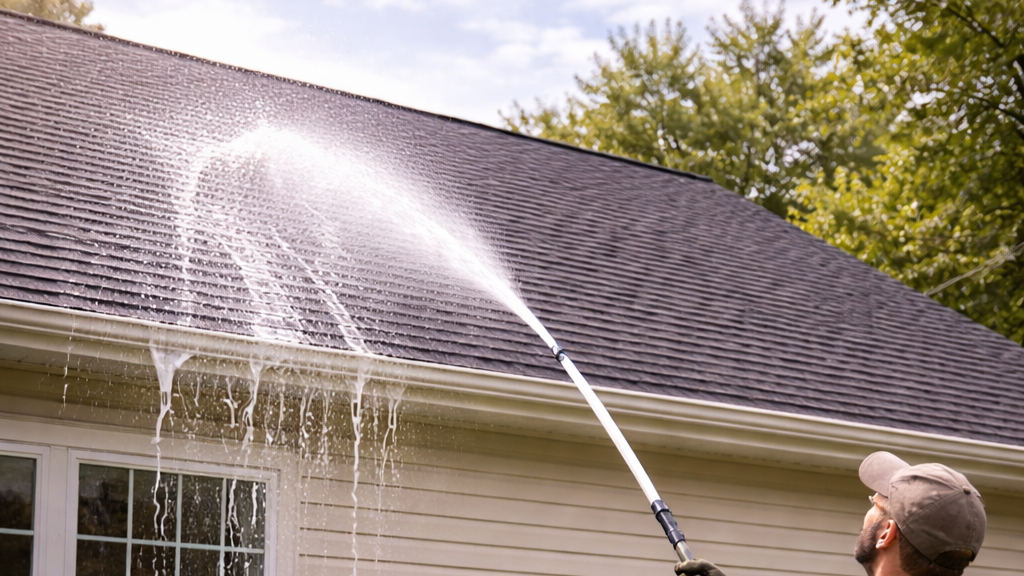
The industry standard and recommended method for roof washing is **soft washing**. This technique involves:
- Low-Pressure Application: Specialized equipment delivers cleaning solutions at pressures comparable to a garden hose, ensuring no damage to the roof surface.
- Biodegradable Cleaning Solutions: Professional-grade detergents are used to break down and eliminate algae, moss, lichen, and other organic contaminants at their root, ensuring long-lasting results. These solutions are formulated to be safe for your roofing materials, landscaping, and pets when applied correctly.
- Gentle Rinse: After the solution has had time to work, the roof is gently rinsed to remove loosened debris and residual cleaner.
Soft washing effectively sanitizes the roof surface, killing the microorganisms that cause staining and deterioration, rather than just blasting them away temporarily. This approach not only cleans your roof but also treats the underlying problem, inhibiting regrowth for an extended period.
When to Call the Professionals: Signs You Need a Roof Wash
Knowing when to schedule a roof wash can save you from more severe issues down the line. Keep an eye out for these tell-tale signs:
- Black Streaks: The most common sign of Gloeocapsa magma algae.
- Green Patches: Indicates moss growth, particularly in shaded or damp areas.
- White/Gray Crusty Spots: These are lichens, which are a combination of algae and fungi and are notoriously difficult to remove without professional help.
- Visible Dirt and Debris: General accumulation of leaves, needles, and grime can also harbor moisture and organic growth.
- Energy Bill Increase: Darkened roofs absorb more heat, potentially driving up your cooling costs.
For most homes, a roof wash every 1-3 years is a good proactive maintenance schedule, depending on your climate and surrounding vegetation. Don’t wait until the damage is extensive. Ready to get started? You can Find us on Google Maps to locate a reputable professional near you.
Key Takeaways
- Roof washing is essential for both your home’s aesthetics and its structural longevity, preventing damage from algae, moss, and lichen.
- Ignoring biological growth can lead to premature roof deterioration, higher energy costs, and costly repairs down the line.
- Soft washing is the industry-approved method, utilizing low pressure and specialized detergents to effectively clean and treat your roof without damage.
- Costs vary based on roof size, pitch, material, and severity of growth, but it’s a wise investment compared to early roof replacement.
- Look for black streaks, green patches, or white/gray crusty spots as indicators that your roof needs professional attention.